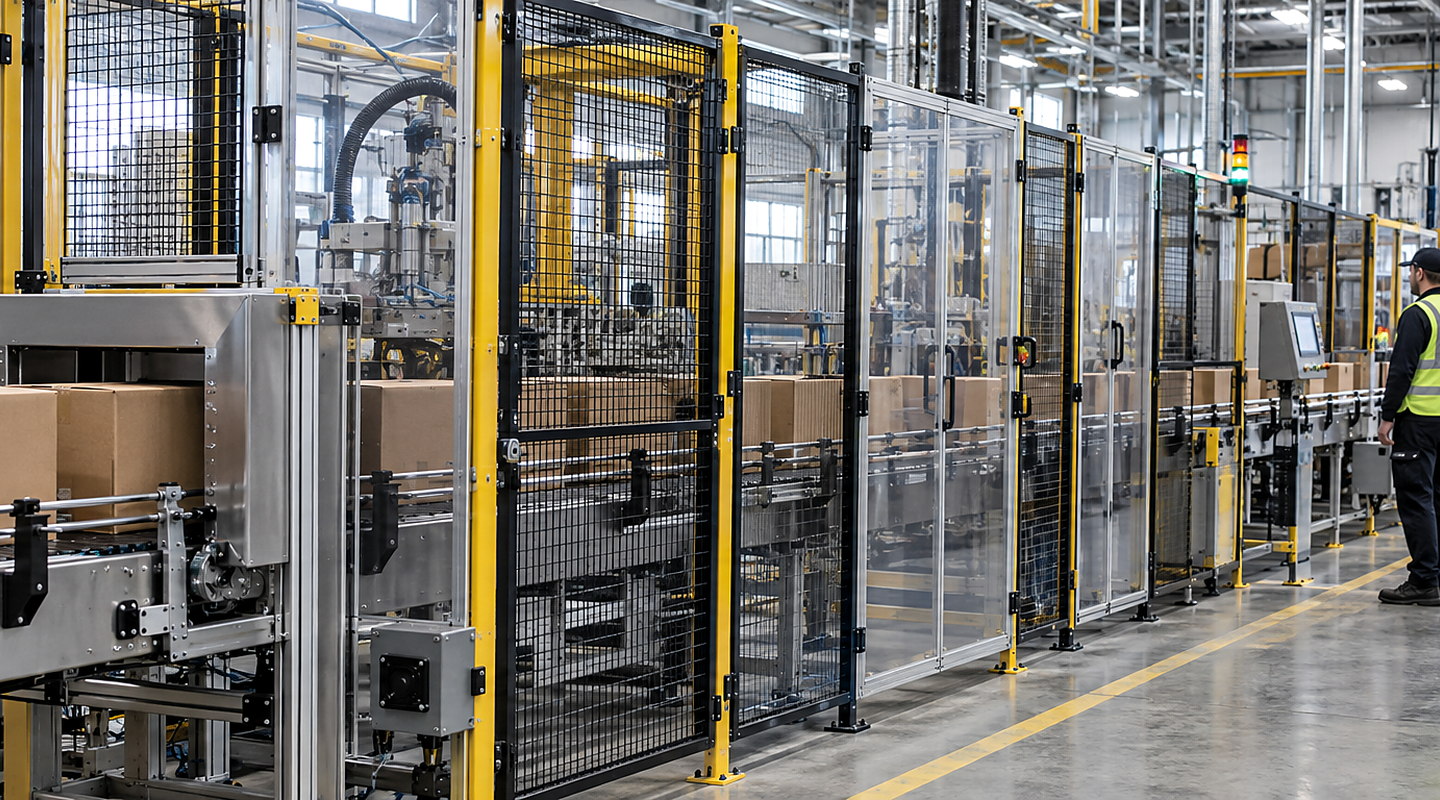
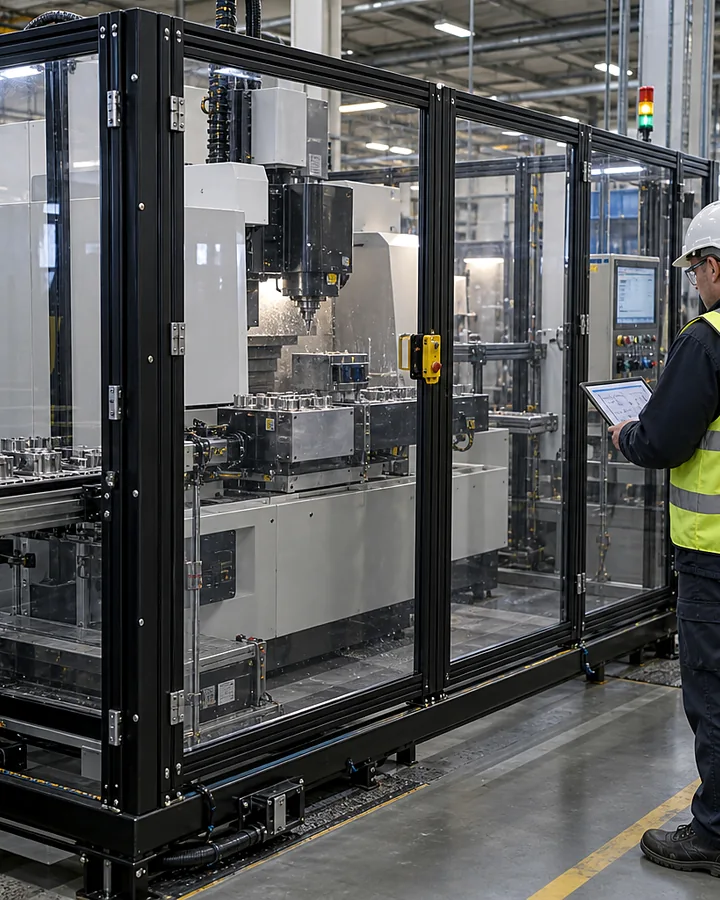
Hazards and Foreseeable Access for Machine Noise-Control Enclosures: Hazard and access survey
Record a noise-enclosure machine survey covering the noise concern, working positions, operating states, loading and maintenance access, heat, ventilation and existing safeguards.
In brief
Record the noise concern alongside the machine duties and where people work. Map loading, observation, cleaning and maintenance access with heat, ventilation and services. Keep existing safeguards, machine motion/stopping and control interfaces in the same survey so the enclosure concept can be assessed for the actual installation.
Turn your production information into clearer decisions — Machine Noise Control Enclosures
Plan machine noise control enclosures around your machine hazards, operator tasks, access, stopping behaviour and validation evidence. Discuss a site-specific safeguarding concept with Oxford Machine Guarding. Use this guide to resolve hazards and foreseeable access for machine noise-control enclosures before it limits the final system.
Hazards and Foreseeable Access for Machine Noise-Control Enclosures: condition, range and effect on your process
Current condition
Identify machine duties, the noise concern and available measurements, operator/nearby working positions and production conditions. Map actual access tasks, existing safeguards and heat, ventilation, loading/discharge and service requirements.
Realistic range
Represent intended operating states and production patterns, normal operator positions and credible access needs. Include cleaning, maintenance and foreseeable intervention, stating conditions or machine changes outside the assessment.
Effect on the system
Show how the enclosure layout, openings, visibility, services and heat/ventilation needs interact with operation and maintenance. Retain the measurement plan, machine-interface responsibilities and relevant safeguarding checks with unresolved actions.
Before you contact us
Five questions about hazards and foreseeable access for machine noise-control enclosures for your application
Who can confirm this information?Identify production, maintenance, engineering and appropriate noise/safety assessment owners for operating conditions, working positions, requirements and retained results.
How representative is the sample?Use the actual machine, normal duties and working positions, with the access, services and environmental conditions relevant to the proposed enclosure.
What is the difficult condition?Include the difficult loading or maintenance access, foreseeable intervention and operating state associated with the noise concern, including the required heat and ventilation conditions.
How will you judge the result?Agree measurement positions, method and comparable machine conditions before testing; retain actual results, access/ventilation observations, relevant safeguarding checks and discrepancies.
What else must be coordinated?Coordinate loading/discharge, services, controls, heat and ventilation, visibility and routine/maintenance access with task-based risk assessment, responsibilities and operating/inspection information.
Connected details
Review hazards and foreseeable access for machine noise-control enclosures as part of the complete system
Question 1
Hazards and Foreseeable Access for Machine Noise-Control Enclosures
For Hazards and Foreseeable Access for Machine Noise-Control Enclosures: Hazard and access survey, describe the current position, required outcome, acceptable limits and known exceptions for hazards and foreseeable access for machine noise-control enclosures. That lets us compare options against your real production rather than one nominal value.
Question 2
Machine Motion and Stopping Behaviour
For Hazards and Foreseeable Access for Machine Noise-Control Enclosures: Hazard and access survey, describe the current position, required outcome, acceptable limits and known exceptions for machine motion and stopping behaviour. That lets us compare options against your real production rather than one nominal value.
Question 3
Operating, Cleaning and Maintenance Tasks
For Hazards and Foreseeable Access for Machine Noise-Control Enclosures: Hazard and access survey, describe the current position, required outcome, acceptable limits and known exceptions for operating, cleaning and maintenance tasks. That lets us compare options against your real production rather than one nominal value.
Question 4
Existing Control-System Architecture
For Hazards and Foreseeable Access for Machine Noise-Control Enclosures: Hazard and access survey, describe the current position, required outcome, acceptable limits and known exceptions for existing control-system architecture. That lets us compare options against your real production rather than one nominal value.
Question 5
Space, Visibility and Operator Ergonomics
For Hazards and Foreseeable Access for Machine Noise-Control Enclosures: Hazard and access survey, describe the current position, required outcome, acceptable limits and known exceptions for space, visibility and operator ergonomics. That lets us compare options against your real production rather than one nominal value.
Question 6
Risk-Reduction and Validation Evidence
For Hazards and Foreseeable Access for Machine Noise-Control Enclosures: Hazard and access survey, describe the current position, required outcome, acceptable limits and known exceptions for risk-reduction and validation evidence. That lets us compare options against your real production rather than one nominal value.